


The compression set of a sealing cover is a crucial property that directly influences its performance and longevity, especially in the context of Intermediate Bulk Containers (IBCs). As a supplier of IBC Black Sealing Covers, I am well - versed in the significance of compression set and its implications for our products.
Understanding Compression Set
Compression set is defined as the inability of a material to return to its original thickness after being compressed for a specific period under a given temperature and pressure. In simpler terms, when a sealing cover is compressed between two surfaces, it deforms. The compression set measures the amount of permanent deformation that remains after the compressive force is removed.
Mathematically, the compression set is calculated using the following formula:
[CS=\frac{t_0 - t_1}{t_0 - t_s}\times100%]
where (CS) is the compression set, (t_0) is the original thickness of the specimen, (t_1) is the thickness of the specimen after recovery, and (t_s) is the thickness of the spacer used during compression.
Importance of Compression Set in IBC Black Sealing Covers
IBCs are used to store and transport a wide range of substances, including chemicals, food products, and pharmaceuticals. The sealing cover plays a vital role in preventing leakage, contamination, and maintaining the integrity of the contents. A low compression set is essential for several reasons:
Leakage Prevention
A sealing cover with a high compression set will not fully recover its original shape after being compressed. This can lead to gaps between the cover and the IBC opening, allowing the contents to leak out. For example, in the case of hazardous chemicals, even a small leak can pose significant safety risks and environmental hazards.
Contamination Resistance
A good seal is necessary to prevent external contaminants from entering the IBC. If the compression set is high, the cover may not provide an effective barrier, allowing dust, moisture, or microorganisms to enter the container. This can compromise the quality of the stored products, especially in the food and pharmaceutical industries.
Long - Term Performance
IBCs are often used for multiple cycles of filling, transportation, and storage. A sealing cover with a low compression set will maintain its sealing properties over time, ensuring consistent performance throughout its lifespan. This reduces the need for frequent replacement, saving both time and money for the end - users.
Factors Affecting the Compression Set of IBC Black Sealing Covers
Several factors can influence the compression set of IBC Black Sealing Covers:
Material Selection
The choice of material is one of the most critical factors. Different materials have different inherent properties that affect their compression set. For example, elastomers such as silicone, EPDM (Ethylene Propylene Diene Monomer), and nitrile rubber are commonly used in IBC sealing covers. Silicone rubber generally has a relatively low compression set, making it suitable for applications where high - temperature resistance and long - term sealing are required. EPDM is known for its excellent resistance to weathering, ozone, and chemicals, and also has good compression set properties. Nitrile rubber, on the other hand, offers good oil and fuel resistance but may have a higher compression set compared to silicone or EPDM in some cases.
Temperature
Temperature has a significant impact on the compression set of elastomeric materials. As the temperature increases, the molecular mobility of the material also increases, making it more prone to permanent deformation. For IBCs that are exposed to high - temperature environments during storage or transportation, it is essential to select a sealing cover material that can maintain a low compression set at elevated temperatures.
Compression Time and Pressure
The longer the sealing cover is compressed and the higher the pressure applied, the greater the likelihood of permanent deformation. During the manufacturing process of IBCs, the proper installation of the sealing cover is crucial to ensure that the compression time and pressure are within the recommended limits.
Testing the Compression Set of IBC Black Sealing Covers
To ensure the quality and performance of our IBC Black Sealing Covers, we conduct rigorous compression set testing. The testing is typically carried out in accordance with international standards such as ASTM D395.
The test procedure involves the following steps:
- Sample Preparation: A specimen of the sealing cover material is cut to the specified dimensions.
- Compression: The specimen is placed between two parallel plates and compressed to a specific thickness using a spacer. The assembly is then placed in an oven at a specified temperature for a given period.
- Recovery: After the compression period, the specimen is removed from the oven and allowed to recover at room temperature for a specific time.
- Measurement: The thickness of the specimen is measured before and after compression and recovery, and the compression set is calculated using the formula mentioned earlier.
Our Product Range and Compression Set Performance
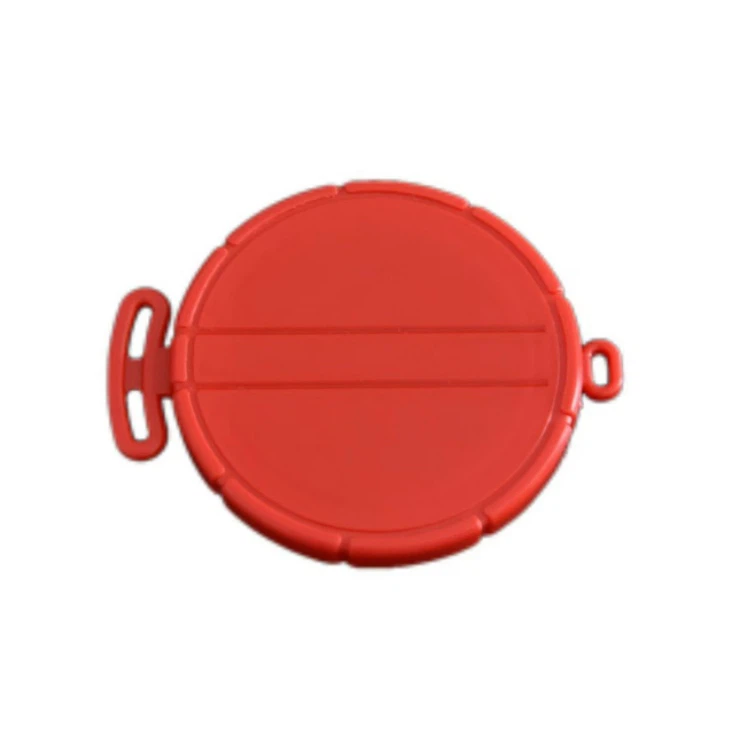
As a supplier, we offer a variety of IBC sealing covers, including the IBC DN150 Black Breathable Cover, IBC Brushed Cover, and IBC Red Breathable Cover. Our products are designed to have a low compression set, ensuring excellent sealing performance.
For example, our IBC DN150 Black Breathable Cover is made from high - quality EPDM rubber. Through extensive testing, we have found that it has a compression set of less than 20% after 22 hours of compression at 70°C, which is well within the industry standards. This low compression set allows the cover to maintain a tight seal even after multiple cycles of use.
Contact Us for Procurement
If you are in the market for high - quality IBC Black Sealing Covers with excellent compression set performance, we would be delighted to discuss your requirements. Our team of experts can provide you with detailed product information, technical support, and competitive pricing. Whether you need a small quantity for a trial or a large - scale order for your production line, we are here to meet your needs. Contact us today to start the procurement process and ensure the safety and integrity of your IBC storage and transportation operations.

References
- ASTM D395 - Standard Test Methods for Rubber Property - Compression Set.
- "Elastomers: Structure, Properties, and Applications" by B. D. Kulkarni.
- "Handbook of Sealant Technology" by Robert M. Hull.


