


Hey there! As a supplier of Ibc Tank Butterfly Valves, I often get asked a bunch of questions about these valves, and one that pops up quite a bit is, "Can an Ibc Tank Butterfly Valve be used in a vacuum environment?" Well, let's dig into this topic and find out.
First off, let's understand what an Ibc Tank Butterfly Valve is. An IBC Tank Butterfly Valve is a type of valve that uses a disc - shaped closure element, which rotates around a shaft to control the flow of fluid or gas in a pipeline. It's a popular choice for many industrial applications because it's relatively simple in design, cost - effective, and easy to operate.
Now, when it comes to a vacuum environment, things get a bit more complicated. A vacuum is a space where the pressure is significantly lower than the atmospheric pressure. In a vacuum system, we need valves that can handle the pressure differential and prevent any outside air from leaking in.
The performance of an Ibc Tank Butterfly Valve in a vacuum environment depends on several factors. One of the most important factors is the valve's sealing capability. In a vacuum, even the slightest leak can disrupt the system's performance. The sealing material of the butterfly valve plays a crucial role here. Most Ibc Tank Butterfly Valves use elastomeric seals, like rubber or silicone. These materials are generally good at creating a tight seal under normal conditions, but in a vacuum, they need to be able to withstand the pressure difference without deforming or losing their sealing properties.
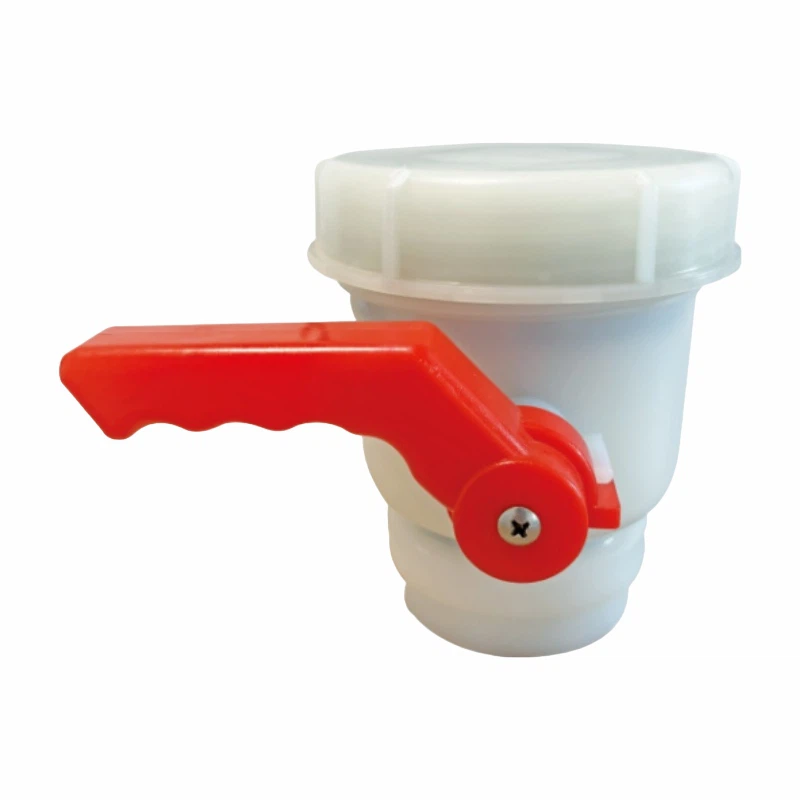

Another factor is the valve's construction. The body and the disc of the butterfly valve need to be strong enough to resist the forces exerted by the pressure differential. If the valve is not well - constructed, it could warp or crack under the vacuum, leading to leaks.
Let's talk about the advantages of using an Ibc Tank Butterfly Valve in a vacuum environment. One of the main advantages is its quick - acting nature. Butterfly valves can be opened or closed rapidly, which is useful in vacuum systems where you might need to control the flow of gases or fluids quickly. Also, they have a relatively low profile, which means they take up less space compared to some other types of valves. This can be a big plus in a vacuum system where space might be limited.
However, there are also some challenges. As I mentioned earlier, the sealing can be an issue. If the seal fails, it can cause the vacuum to break, and you'll have to spend time and money on repairs. Also, the valve's disc might experience vibration in a vacuum, which can further affect its sealing and overall performance.
To give you an idea of the range of products we offer, we also have IBC DN80 Welded Ball Valve and IBC DN50 Welded Ball Valve. These ball valves are also suitable for various applications, and they have their own advantages, such as better flow control and higher pressure ratings in some cases.
In some cases, an Ibc Tank Butterfly Valve can be used in a vacuum environment, but it needs to be carefully selected and installed. We've had customers who've used our Ibc Tank Butterfly Valves in low - vacuum applications, like in some small - scale laboratory setups. In these cases, the valves have performed quite well as long as the proper precautions were taken.
For medium - to high - vacuum applications, though, we might need to do some modifications or choose a different type of valve. For example, we can use special sealing materials that are more resistant to vacuum conditions. We can also reinforce the valve's body and disc to make it more durable.
If you're thinking about using an Ibc Tank Butterfly Valve in a vacuum environment, here are some tips. First, make sure to consult with a professional. We're always here to help you figure out if our valve is the right choice for your specific application. Second, have the valve installed by a qualified technician. Proper installation is key to ensuring the valve works well in a vacuum.
We've done a lot of testing on our Ibc Tank Butterfly Valves to see how they perform in different conditions. We've found that with the right design and materials, they can be a viable option for some vacuum applications. But it's always a good idea to start with a small - scale test before implementing the valve in a full - scale vacuum system.
In conclusion, while an Ibc Tank Butterfly Valve can potentially be used in a vacuum environment, it's not a one - size - fits - all solution. You need to consider the specific requirements of your vacuum system, such as the level of vacuum, the type of gases or fluids involved, and the system's overall design.
If you're in the market for valves for your vacuum system or any other application, we'd love to have a chat with you. Our team of experts can help you choose the right valve for your needs, whether it's an Ibc Tank Butterfly Valve, an IBC DN80 Welded Ball Valve, or an IBC DN50 Welded Ball Valve. Contact us to start a discussion about your valve requirements and let's find the best solution together.
References:
- Industrial Valve Handbook
- Vacuum Technology Principles and Applications


