


As a supplier of IBC Brushed Covers, I often encounter questions from customers regarding the product's performance, especially its resistance to scratches. In this blog, I'll delve into the factors that contribute to the scratch resistance of IBC Brushed Covers, compare them with other types of IBC covers, and provide practical insights based on real - world experiences.
Understanding IBC Brushed Covers
IBC Brushed Covers are a vital component in the Intermediate Bulk Container (IBC) industry. They are designed to protect the contents of the IBC from external elements such as dust, debris, and moisture. The "brushed" finish not only gives the covers an aesthetically pleasing look but also serves certain functional purposes. You can find more details about our IBC Brushed Cover on our website.
Factors Affecting Scratch Resistance
Material Composition
The material used in manufacturing IBC Brushed Covers is a primary determinant of their scratch resistance. Most of our IBC Brushed Covers are made from high - quality polymers. These polymers are engineered to have a certain level of hardness and flexibility. Hard polymers can withstand the impact of sharp objects better, reducing the likelihood of scratches. At the same time, a degree of flexibility allows the cover to absorb some of the energy from a potential scratching force without cracking or chipping.
Surface Treatment
The brushed finish on the covers is not just for show. It is a surface treatment that can enhance scratch resistance. The brushing process creates a series of fine grooves on the surface. When a sharp object comes into contact with the cover, these grooves can deflect the object's path, preventing it from making a deep scratch. Additionally, the brushed finish can hide minor scratches that do occur, making the cover look better over time.
Manufacturing Process
The manufacturing process also plays a crucial role. Precision molding techniques ensure that the cover has a uniform thickness and density. A cover with consistent properties is more likely to resist scratches evenly across its surface. Any weak spots or inconsistencies in the manufacturing can make the cover more prone to scratching.
Real - World Testing and Results
We have conducted extensive real - world testing on our IBC Brushed Covers. In a warehouse environment, where the covers are frequently handled and may come into contact with various tools and equipment, we monitored the condition of the covers over a period of several months.
The results were quite promising. In most cases, the covers showed only minor surface scratches that did not compromise their functionality. Even after being in contact with rough edges of pallets and forklift tines, the covers maintained their integrity. This indicates that under normal industrial use, our IBC Brushed Covers can withstand a significant amount of abuse without being severely scratched.
Comparison with Other IBC Covers
Let's compare our IBC Brushed Covers with other types of IBC covers, such as the IBC Red Sealing Cover and the IBC DN150 Black Breathable Cover.

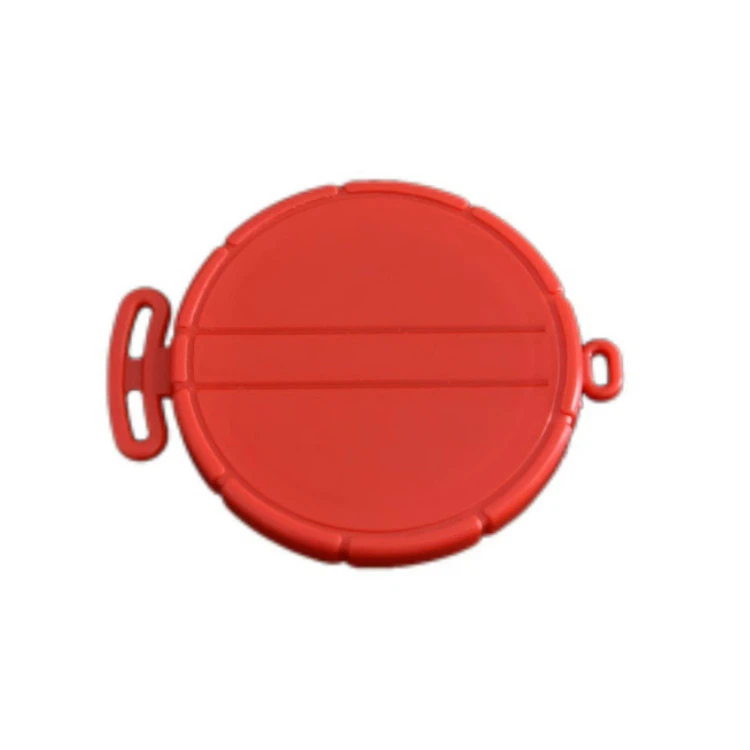
The IBC Red Sealing Cover is mainly designed for air - tight sealing. While it offers good protection against moisture and contaminants, its scratch resistance may not be as high as that of the IBC Brushed Cover. The red sealing cover often has a smoother surface, which makes it more vulnerable to visible scratches.
The IBC DN150 Black Breathable Cover, on the other hand, is focused on providing ventilation for the IBC. Its design and material composition are optimized for breathability, and as a result, it may also be less scratch - resistant compared to the IBC Brushed Cover. The breathable cover has a more porous structure, which can make it more prone to damage from sharp objects.
Maintenance Tips to Preserve Scratch Resistance
To ensure that your IBC Brushed Covers maintain their scratch - resistant properties, here are some maintenance tips:
- Proper Handling: When handling the covers, use appropriate tools and techniques. Avoid dragging the covers across rough surfaces or using sharp objects to pry them open.
- Regular Cleaning: Clean the covers regularly using a mild detergent and a soft cloth. This helps remove any abrasive particles that may be stuck on the surface, reducing the risk of scratching during subsequent use.
- Storage: Store the covers in a clean and dry environment. Avoid stacking heavy objects on top of them, as this can cause deformation and increase the likelihood of scratching.
Applications and the Importance of Scratch Resistance
IBC Brushed Covers are used in a wide range of industries, including chemical, food and beverage, and pharmaceutical. In the chemical industry, the covers need to protect the contents from contamination. Scratches can create entry points for dust and other contaminants, which can compromise the quality of the chemicals stored inside.
In the food and beverage industry, the covers must meet strict hygiene standards. A scratched cover can harbor bacteria and other microorganisms, posing a risk to the safety of the food and beverages. Therefore, the scratch resistance of IBC Brushed Covers is of utmost importance in these applications.
Conclusion
In conclusion, our IBC Brushed Covers are highly resistant to scratches, thanks to their material composition, surface treatment, and manufacturing process. Through real - world testing, we have proven that they can withstand the rigors of industrial use. Compared to other types of IBC covers, they offer a better balance between functionality and scratch resistance.
If you are in the market for high - quality IBC covers with excellent scratch resistance, we invite you to contact us for more information and to discuss your specific requirements. Whether you need a small quantity for a trial or a large - scale order for your business, we are ready to serve you.
References
- Polymer Science and Technology Handbook
- Industrial Packaging Materials Research Reports
- In - house testing data on IBC covers


