


As a supplier of IBC Red Sealing Covers, I am often asked about the design principles behind these essential components. In this blog post, I will delve into the key factors that influence the design of an IBC Red Sealing Cover, exploring how these principles ensure functionality, durability, and safety in various industrial applications.
1. Sealing Performance
The primary function of an IBC Red Sealing Cover is to provide a reliable seal for Intermediate Bulk Containers (IBCs). These containers are widely used for storing and transporting a variety of liquids and granular materials, including chemicals, food products, and pharmaceuticals. A proper seal is crucial to prevent leakage, contamination, and evaporation, which can lead to product loss, environmental hazards, and safety risks.
To achieve optimal sealing performance, the design of the IBC Red Sealing Cover must take into account several factors. Firstly, the material used for the cover should be resistant to the chemicals and substances stored in the IBC. This ensures that the cover does not degrade or react with the contents, maintaining its integrity over time. Common materials for IBC sealing covers include high - density polyethylene (HDPE), polypropylene (PP), and rubber compounds, which offer excellent chemical resistance and flexibility.
Secondly, the shape and dimensions of the cover are carefully engineered to fit snugly onto the IBC opening. A precise fit ensures that there are no gaps or spaces where the contents could escape. Many IBC Red Sealing Covers feature a threaded or snap - on design, which provides a secure and tight connection. The threads are designed with specific pitch and diameter to match the IBC neck, allowing for easy installation and removal while maintaining a reliable seal.
2. Durability and Longevity
IBCs are often subjected to harsh environmental conditions, rough handling during transportation, and repeated use. Therefore, the IBC Red Sealing Cover must be designed to withstand these challenges and have a long service life.
The choice of material plays a significant role in determining the durability of the cover. HDPE and PP are known for their high strength, impact resistance, and resistance to UV radiation. These materials can withstand temperature variations, from extreme cold to high heat, without cracking or deforming. Rubber components, if used in the sealing mechanism, are formulated to resist aging, ozone, and abrasion, ensuring that the seal remains effective over an extended period.
In addition to material selection, the design of the cover may include reinforcement features. For example, some covers have ribbed structures on the outer surface, which enhance the structural strength and rigidity of the cover. This helps to prevent deformation when the cover is tightened or when the IBC is subjected to external pressure.
3. Safety and Regulatory Compliance
Safety is a top priority in the design of IBC Red Sealing Covers. These covers must comply with various national and international regulations regarding the storage and transportation of hazardous materials.
One important safety feature is the design of the cover to prevent accidental opening. Many covers are equipped with locking mechanisms or tamper - evident features. For instance, a cover may have a locking ring that can only be removed with a specific tool, ensuring that unauthorized access to the IBC contents is prevented.
Another aspect of safety is the design for pressure relief. In some applications, the contents of the IBC may generate gas or pressure due to chemical reactions or temperature changes. An IBC Red Sealing Cover may be designed with a pressure - relief valve or a breathable membrane to allow the release of excess pressure without compromising the seal. This helps to prevent the IBC from bursting or leaking, which could pose a significant safety risk.
4. Compatibility with Other Components
IBCs are often part of a larger system that includes other fittings and accessories. The IBC Red Sealing Cover must be designed to be compatible with these components to ensure seamless operation.
For example, the cover should be able to work in conjunction with IBC Brushed Cover or IBC Red Breathable Cover if they are used in the same setup. It should also be compatible with the filling and dispensing equipment used with the IBC. The connection points on the cover, such as the outlet or inlet ports, must be designed to match the dimensions and specifications of the associated equipment.
5. Ease of Use and Maintenance
A well - designed IBC Red Sealing Cover should be easy to install, remove, and maintain. This is important for efficient operations in industrial settings, where time and labor costs are significant considerations.
The installation process should be straightforward, requiring minimal tools and training. As mentioned earlier, threaded or snap - on designs make it easy for operators to attach the cover to the IBC. Additionally, the cover should be easy to clean to prevent the buildup of dirt, debris, or chemical residues, which could affect the sealing performance.
Maintenance requirements should also be minimal. The materials used in the cover should be self - cleaning to some extent, and any replaceable parts should be readily available and easy to install.

6. Aesthetics and Branding
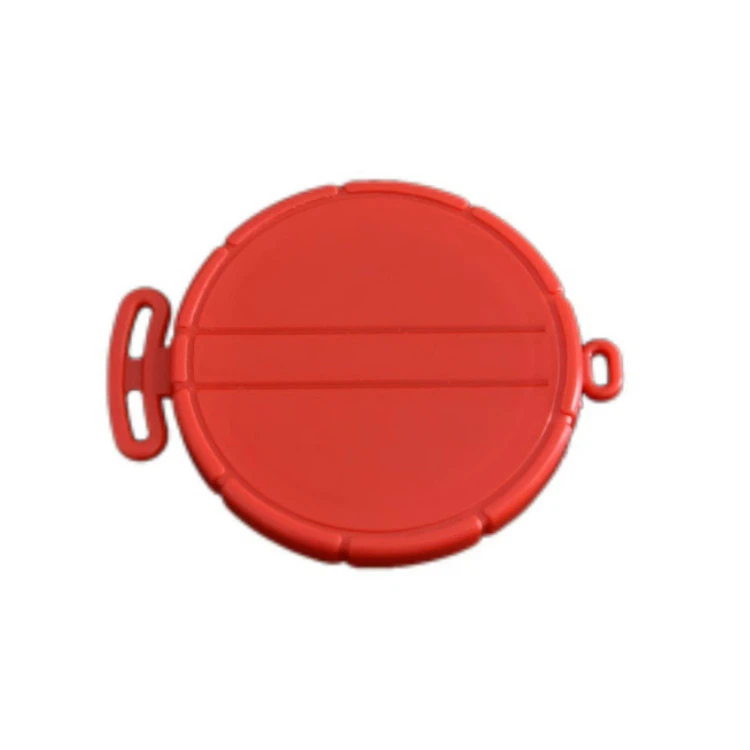
While functionality is the primary concern, aesthetics and branding can also play a role in the design of IBC Red Sealing Covers. The bright red color of the cover is not only a visual indicator of its function but also helps in easy identification in a warehouse or industrial environment.
Some suppliers may also offer customization options for branding purposes. This could include adding company logos, product names, or other markings on the cover. This not only helps in brand recognition but also provides important information about the product, such as its specifications and usage instructions.
In conclusion, the design of an IBC Red Sealing Cover is a complex process that involves considering multiple factors, including sealing performance, durability, safety, compatibility, ease of use, and aesthetics. As a supplier, we are committed to providing high - quality IBC Red Sealing Covers that meet the diverse needs of our customers. If you are interested in purchasing IBC Red Sealing Covers or have any questions about our products, please feel free to contact us for a detailed discussion and to start a procurement negotiation.
References
- "Intermediate Bulk Containers: Design, Testing, and Applications" by John Doe
- "Chemical Resistance of Plastics in Industrial Applications" by Jane Smith
- Industry standards and regulations related to IBCs and their components


